


Yuzu kosho is the king of Japanese condiments. Made with fresh yuzu zest and togarashi chili. It's a hot aromatic fermented chili paste that can easily be made at home using just three ingredients.

If you are able to get your hands on fresh yuzu then I encourage you to make a batch of yuzu kosho. Yes, you can buy it bottled at Japanese grocery shops, but nothing compares to freshly made.
It has a taste like no other chili paste. It adds a serious deep citrus chili kick to whatever it is used with. Plus, it is the most addictive condiment I have ever come across.
You may have seen it pop onto more and more restaurant menus of late. Bon Appétit claims it is "the secret weapon condiment chefs are putting on everything", and they are pretty spot on.
Can't find fresh yuzu? Don't worry I have you covered below with some yuzu substitutes.
Sara xxx
What's in this post
What is Yuzu Kosho?
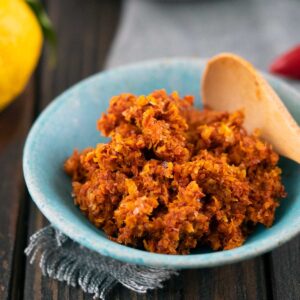
Yuzu kosho is a three ingredient Japanese citrus chili paste. Made with fresh yuzu zest, togarashi chili peppers, and salt. It's an umami rich flavour bomb of a condiment.
The three ingredients are combined in a specific ratio and allowed to ferment for a few days. It is during the short fermentation period that the magic happens and three simple ingredients are transformed into something wonderful.
There are two different kinds, green and red.
~ Green yuzu kosho uses green yuzu that hasn't been allowed to ripen and green chili peppers.
~ Red yuzu kosho uses ripe yellow yuzu and red chili peppers.


How to use this amazing Japanese chili paste
Let's start with how I use it. I have been known to eat it straight from the jar for a spicy hot kick. I don't recommend that approach. You will end up with a very numb tongue.
I mainly use it as a punch of flavour on the side of a dish. A small dollop on the side of noodles or fried rice when I can use as much or as little as I want with each mouthful.
It's also used to elevate packet miso soup, or store bought sushi. The one thing I don't do with it is cook with it. Heat can make a once fragrant and fresh chili paste bitter.
- A condiment for hot pot dishes.
- Use instead of wasabi with sashimi.
- A small smear on teriyaki chicken burgers.
- Use it to make sauces, seasonings, and dressings.
- Add a little to grilled corn.
- Simply as a dipping sauce.
- A side condiment with yakiniku.
- With seared scallops or barbecued prawns/shrimp.
- Lastly, it is perfect with Japanese fried chicken, tori karaage. A dollop mixed with Kewpie mayo is an addictive dipping sauce.
Yuzu Kosho Ingredients

A full printable recipe card can be found at the end of this post with recipe ingredient measurements and method.
- Dried Chilli: Dried Japanese chilli. That particular bottle above was a precious market find in Takayama, Japan.
- Yuzu: Fresh yuzu, the zest/skin is the main part used in this recipe, plus a small amount of juice.
- Fresh Chilli: Red chilli, the above are hot birdseye/Thai chilli. When it comes to Japanese chili, green togarashi is milder than red.
- Salt: Is vital for preserving the yuzu kosho and the fermentation process.
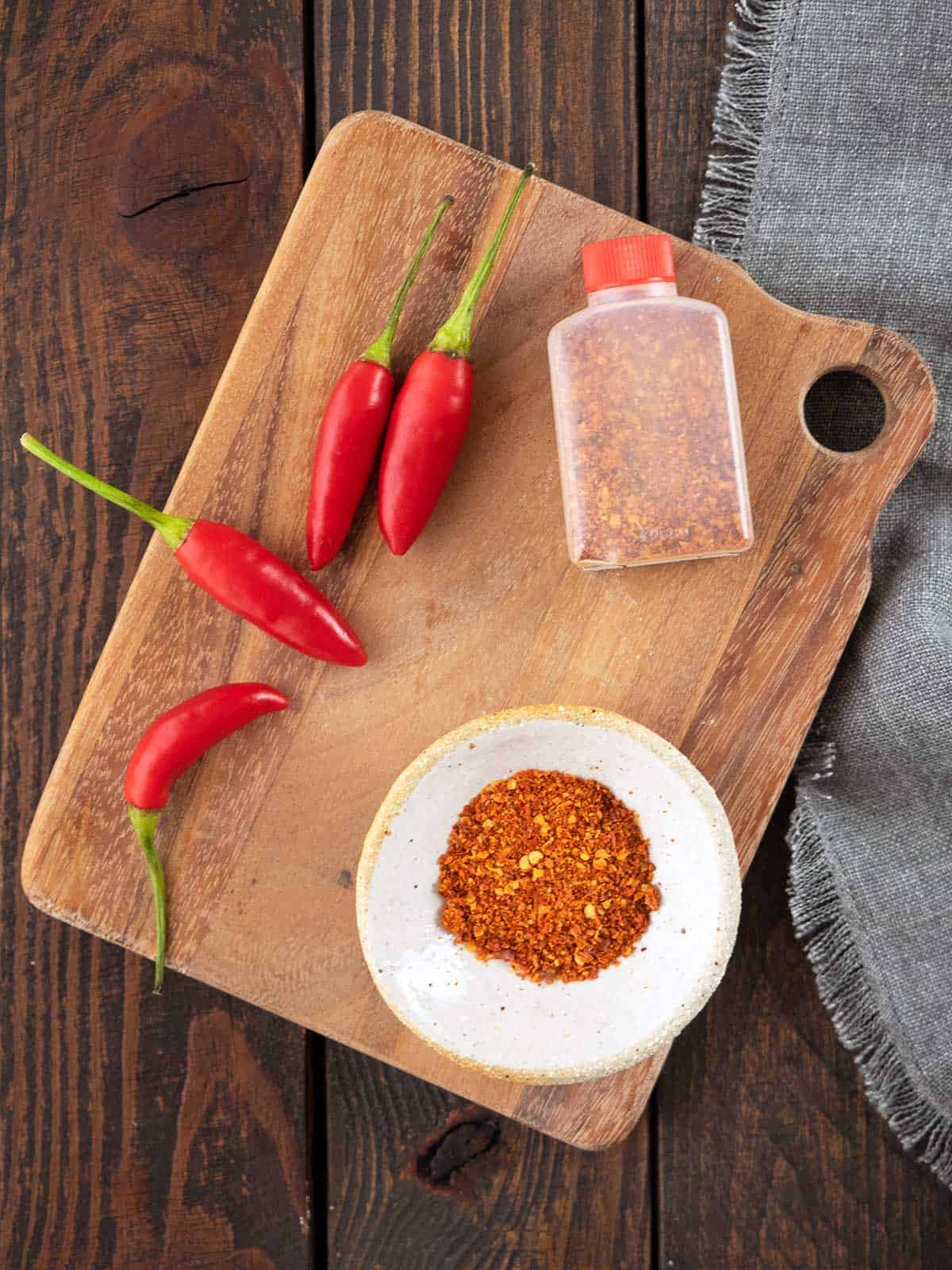
A little more on chilli
The type of chilli you choose is important. Think about how hot you want your yuzu kosho to be.
I've made it with Thai birdseye chillies, and the heat was "blow your head off" hot. It was a lesson learned. Still delicious, but a little went a long way. I suggest using larger and milder chillies.
If you have gone all the trouble to find fresh yuzu, back that up with finding some Japanese chilli, togarashi. It can be fresh or dried.
There is a difference between using fresh or dried chilli. With dried chilli you may want to add a splash of water along with the yuzu juice.
In the end, you want a condiment that has heat, but it isn't so hot that the heat takes away from the yuzu flavour.
Therefore, consider the heat of the chillies you will be using. Maybe start with a little less if they are on the hot side. Taste, and if you feel the heat could be increased, add a touch more.

How to Make Yuzu Kosho
Scroll to the bottom of the page for a printable version of this recipe.
There is an easy ratio rule when it comes to making yuzu kosho. What is great about the ratio rule is that it doesn't matter if you have one yuzu or one hundred yuzu.
Use equal amounts of yuzu and chilli + ¼ of their combined weight of salt.
Ie: 40g yuzu zest + 40g chilli = 80g
You would add 20g of sea salt
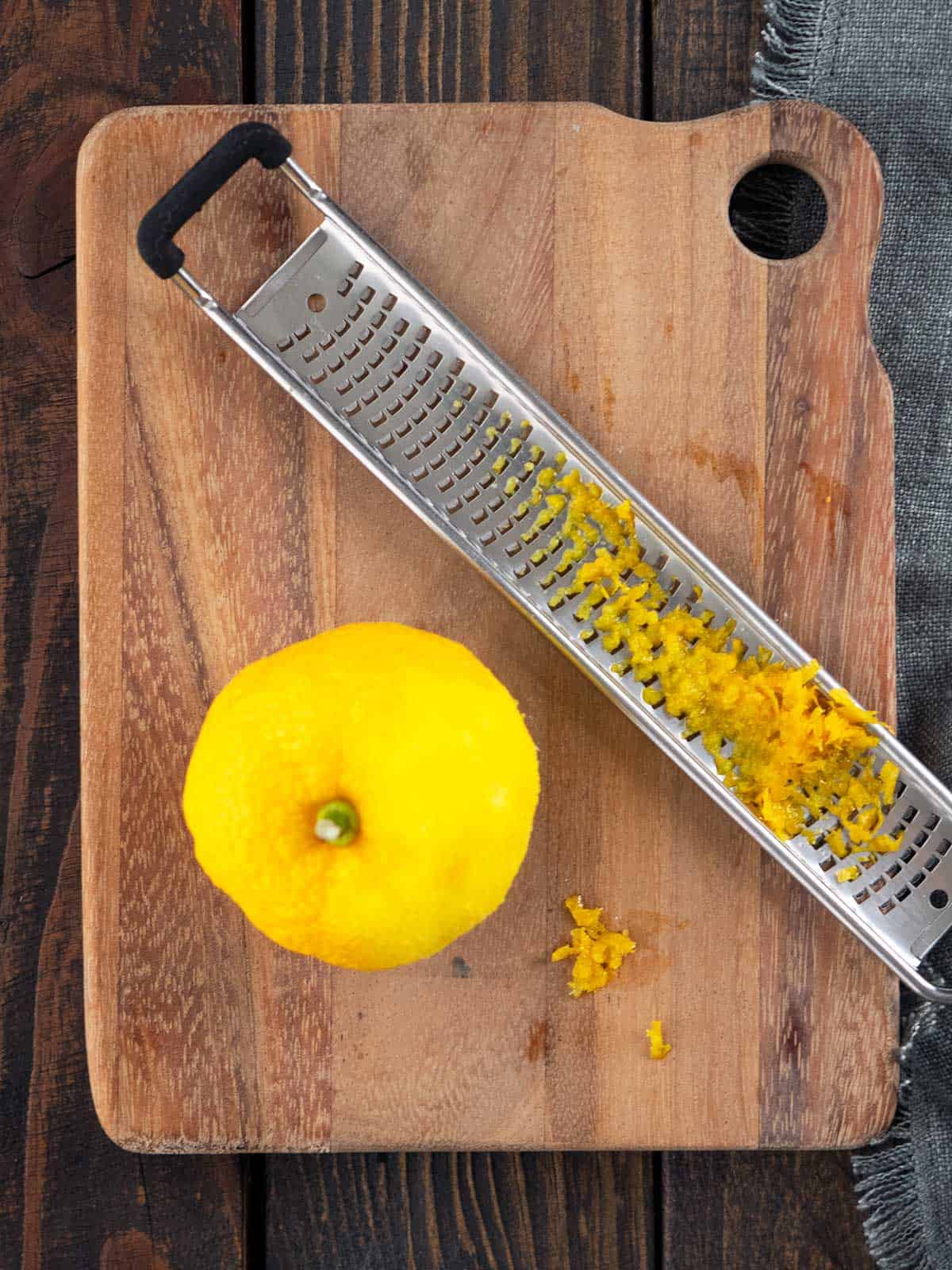
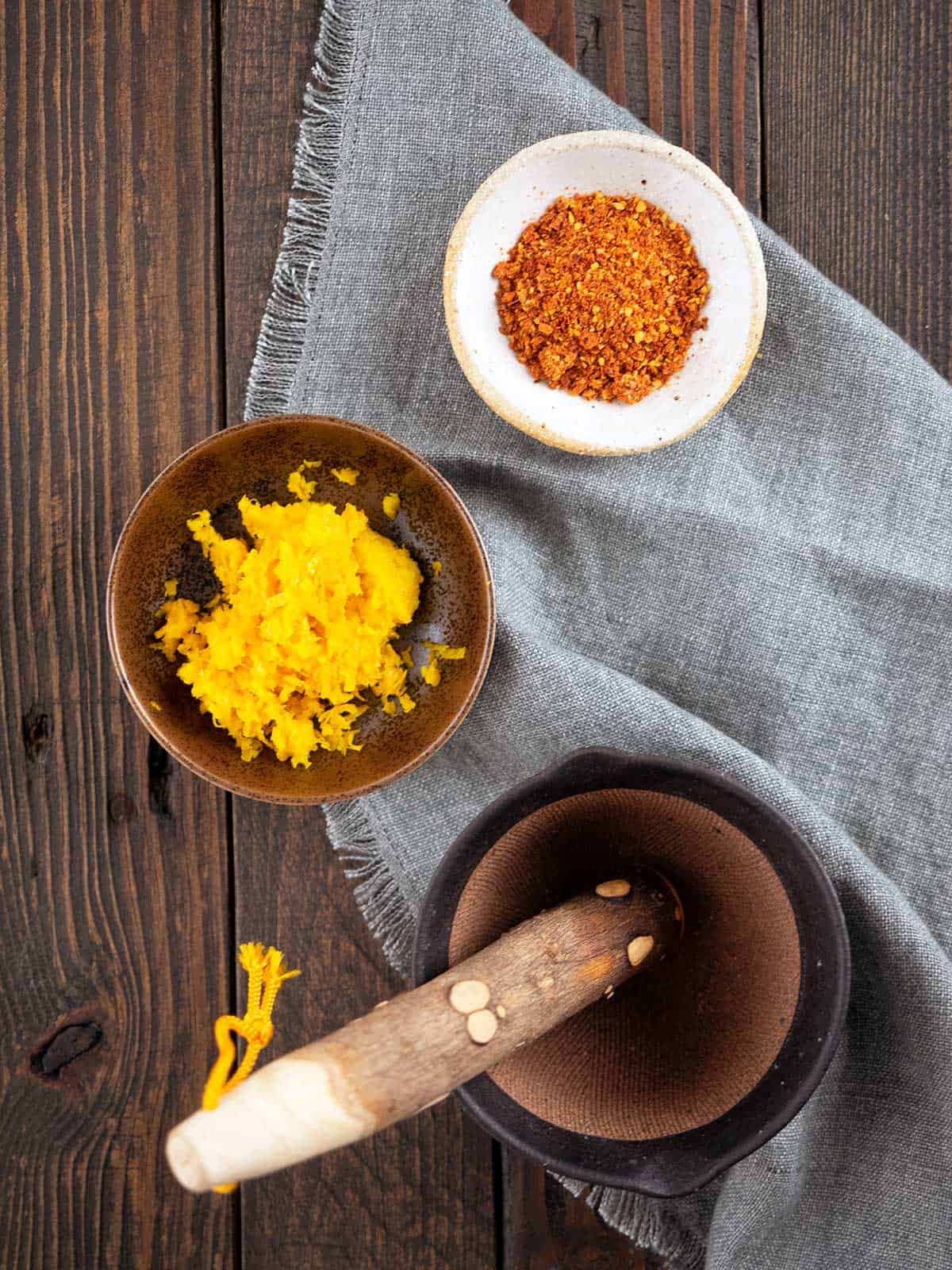
To make yuzu kosho is very simple. Weigh the amount of yuzu zest you have and weigh an equal amount of chilli. Place both ingredients in a mortar and pestle along with a ¼ of their combined weight of salt and 1 tablespoon of yuzu juice.

Grind the ingredients together in the mortar and pestle until thoroughly combined. You could also use a spice grinder or small blender, but the end result will be a lot smoother.

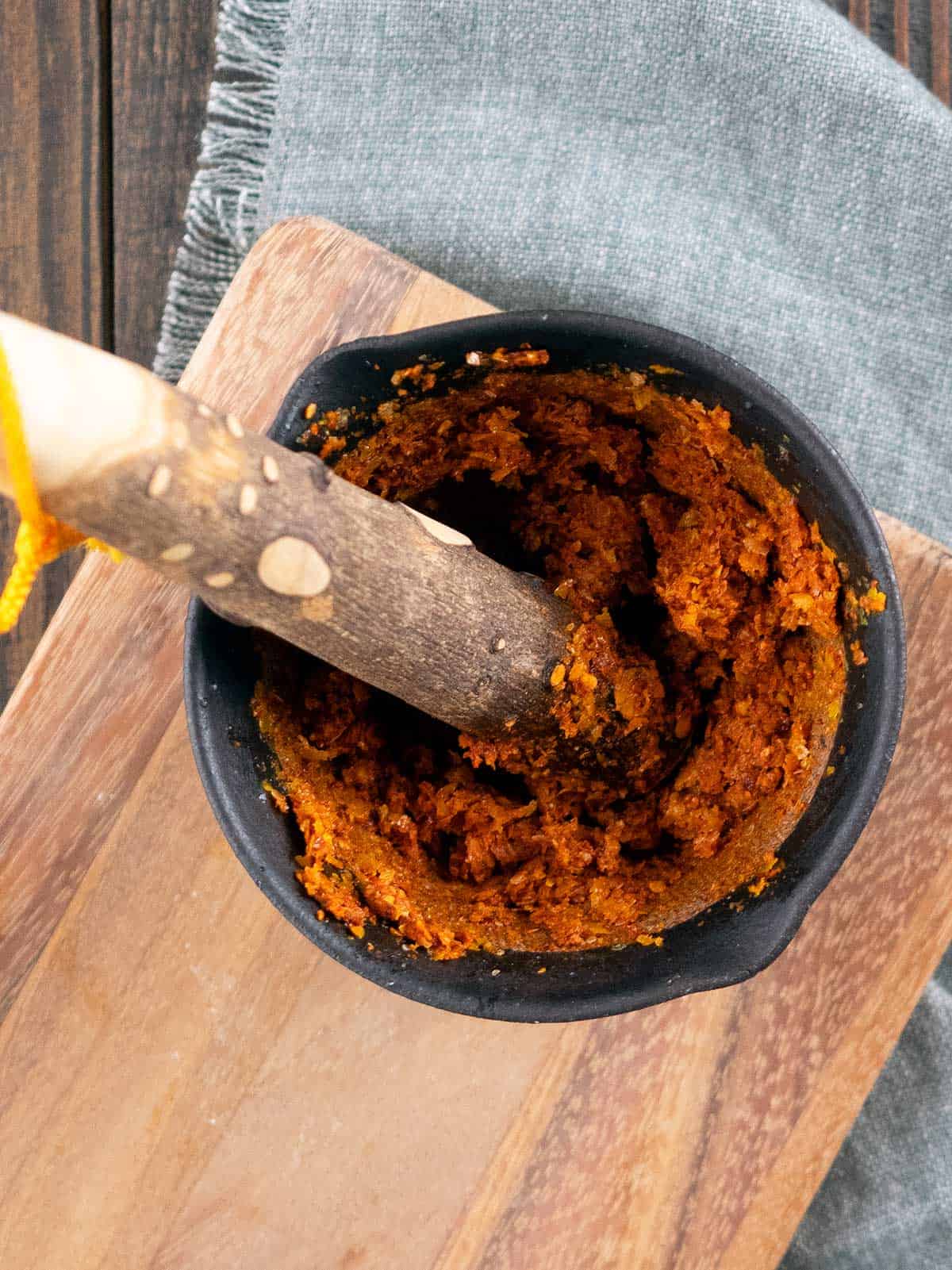
Place the yuzu kosho into a small clean and sterile glass jar and store it in the fridge for up to three months. Allow it to ferment in the fridge for at least 24 hours before using.

What can I substitute for fresh yuzu?
I am sure your first thought is that lemon would be an obvious substitution for yuzu, but it's not. The only thing yuzu and lemon have in common is that they are both citrus fruits.
Yuzu's flavour profile has more similarities with grapefruit and mandarin. In fact, mandarin zest makes a lovely alternative, not the same, but it is really worth making.
Below are some combinations that are worth having a try and playing around with in substitution to yuzu. Simply remember the ratio rule I talk about above.
- Mandarin only
- Mandarin + grapefruit
- Lemon + Mandarin
- Lime + grapefruit + orange
- Mandarin + lemongrass + grapefruit
Sara's Top Recipe Tips
If you can't find yuzu do try making this recipe with mandarin to start with. They are readily available and reasonable in price. Then experiment with other citrus combinations.
You'll end up making yourself a unique condiment. Your own secret foodie weapon, that is worthy of a chef's kitchen.
It will last for up to 3 months in the fridge in a clean, sterile, glass, airtight jar. It can also be kept in the freezer for up to 1.5 years. Store in small portions in an airtight freezer safe container or zip lock bags.
Printable Recipe
Yuzu Kosho
Ingredients
Yuzu Kosho Ratio: Use equal amounts of yuzu and chilli + ¼ of their combined weight of salt.
- 20 grams yuzu zest
- 20 grams chilli | finely chopped
- 10 grams sea salt
- 1 tablespoon yuzu juice | only add if using dried chillies
Instructions
- Place yuzu zest, chilli, and salt in a mortar and pestle and grind until combined. You can also use a small blender for this step.
- Place in a clean and sterile glass jar in the fridge.
- Allow to ferment for at least 24 hours before use.
- Yuzu kosho will keep in the fridge for up to 3 months. It can be frozen for up to 1.5 years.
Oven Temperatures
All oven temperatures are fan forced.
Measurement Notes
All measurements are Australian metric standard. All measures are level, and cups are lightly packed unless specified. 1 teaspoon = 5ml / 1 tablespoon = 20mls / 1 cup = 250ml /4 teaspoons = 1 tablespoon.
Recipe Notes
- Mandarin only
- Mandarin + grapefruit
- Lemon + Mandarin
- Lime + grapefruit + orange
- Mandarin + lemongrass + grapefruit
NUTRITIONAL INFORMATION
The recipe's nutritional information is an approximation based on an online calculator. It is meant solely for reference purposes. If you're looking for precise details, be sure to double-check with your own research.
Anthony Custance
I have never seen, tasted or heard of this paste before. I sounds really interesting, but alas my wife is not into hot spicy. 🙁
I have a 2.5m high x 3m wide Cumquat (oval variety) tree that is laden with fruit each year. I love to eat them fresh picked but cannot keep up with the crop. I harvest about a kg. into a bag each Sunday and give them out to lots of folk at Church, having taught them how to eat them. The cumquats make fabulous Marmalade too. It seems to me that they would make a unique Kosho paste in the light of your suggested variations. Maybe a lot more of a 'fiddle' but different none the less. I live north of Sydney and if you would like some fruit we could sort something. Peak ripeness for this tree is July for 2 months.
Sara McCleary
Hi Anthony
You are very lucky to have such a fruitful cumquat tree, and your fellow church folk are even luckier to have a generous person like you.
The beauty of kosho is you could make a very small batch for yourself. It keeps forever in the fridge. I encourage you to give it a go 🙂
Cheers, Sara
soij
There is so much misinformation on Yuzu Kosho on the internet, it was a relief to find your page. You have it down 100% and I will be sending people here to read up when they ask about it. Great job, thanks!
Yuzu Lover
I planted a yuzu tree last year and have a couple of yuzu on it. Now waiting patiently for them to be ready to harvest. What I want to know, should I wait until they turn yellow, or should I pick them when green? I want to make this recipe.
Sara McCleary
Hi Yuzu Lover
I used yellow yuzu, as you can see from the images in this recipe, as that is what was available to me. But really, if you are growing them it is totally up to you. Store-bought yuzu kosho is generally green, where they use yuzu before it turns yellow. I would make a small batch of both and see which you prefer 🙂
Cheers, Sara
Kevin
Homemade yuzu kosho tastes so different to the store bought kind. Thank you for this recipe. It's so easy to make too. I followed your suggestion of making it with mandarin too, so delicious.
Sara McCleary
Hi Kevin
I do love mandarin kosho, it is incredible in its own right. Glad you liked the recipe, and yes, it tastes totally different from store-bought.
Cheers, Sara
Janice
I as lucky to be given some fresh yuzu from a friend. Originally I was just going to use it as a garnish for cocktails. Made a small batch of your yuzu chilli and it was so tasty. Like nothing I had tasted before.
Sara McCleary
Hi Janice
Lucky you with your gift of yuzu. There are probably a lot of jealous people reading that right now! Glad you enjoyed the kosho, but I hope you enjoyed a few cocktails too.
Cheers, Sara